#TheaterPH - VLF 21 Set D: Pusong Mamon Proved That Mental Health Stories Hit Different on a Philippine Stage
Filipinos are not known for talking about the hard stuff out loud. We were raised to kaya — to endure, to deflect, to answer “okay lang” when we are clearly not okay at all. We feed people when we don’t know what to say. We laugh at the worst possible moments because laughter is easier than the alternative. And we carry things — grief, guilt, the weight of what went unspoken — for years, sometimes for a lifetime, because nobody ever handed us the vocabulary for it. Set D of Virgin Labfest XXI: Hubo’t Hubad hands you that vocabulary. Three plays. Three different ways of saying: you are not alone in this.

Pusong Mamon. Soft-hearted. It’s the name the festival directors gave this set, and the more I sit with it, the more I think it’s the most honest two words they could have chosen. Because Set D isn’t about weakness. A pusong mamon doesn’t break easily — it absorbs. It feels too much. It carries more than it lets on. And every single piece in this lineup understands that particular brand of Filipino tenderness with a precision that caught me off guard.
The through-line threading all three plays together is mental health — not the buzzword version that gets slapped on Instagram graphics, but the lived, messy, unglamorous kind. The kind that lives in family silences and rage and grief and the very human need to be seen before it’s too late. VLF has always been a space for stories that don’t get told anywhere else, and Set D makes the most of that permission.
Buhaghag (written by Gerald Manuel, directed by Tess Jamias) opens the set, and it does not ease you in gently. The play follows a young woman being stalked — psychologically cornered — by a mysterious long-haired figure, a creature that feels less like a monster and more like a manifestation: of her darkest thoughts, of the voice that tells you letting go is easier than holding on. She has to choose between self-preservation and self-destruction, and the way that dilemma is staged makes the air in the theater feel thinner.

What makes Buhaghag land with such force is Krystle Valentino’s portrayal of the lead. She carries the weight of someone drowning in slow motion — not melodramatically, but with the kind of quiet desperation that feels uncomfortably familiar. You’re not watching a character in crisis. You’re watching someone you might know. Someone you might have been. Adrienne Vergara, on the other hand, plays the dark side of the equation with a calm that is far more unsettling than any screaming could ever be. She doesn’t shout the darkness. She whispers it. And that restraint is what makes it terrifying.
What stayed with me most is that Buhaghag doesn’t leave you in the darkness. The ending, without giving it away, offers a sliver of light — not a rescue, not a cure, but a turning. A choice made toward survival rather than away from pain. That’s a harder, more honest kind of hope, and Gerald Manuel earns every moment of it.
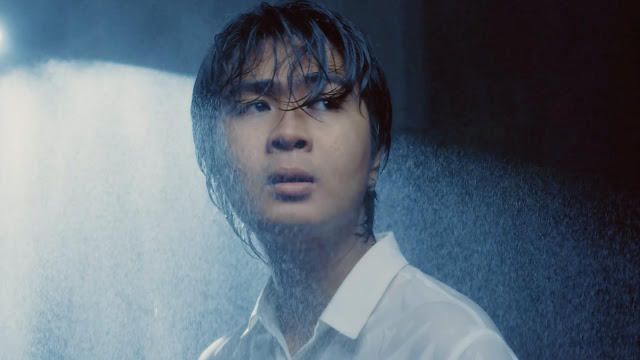
Footprint (written by Jerom Canlas, directed by Mikko Angeles) is, in the most literal sense, a love letter. Jerom Canlas wrote this play for his younger brother JM, who passed away in August 2023 at seventeen years old, after battling depression. Knowing that before the curtain rises changes the way you breathe through the whole thing.

The play centers on a grieving family who keep returning to a virtual archive of memories — digital traces left by a boy they loved but never fully understood. On the surface, it’s a play about loss. But what Footprint is really excavating is the distance between loving someone and knowing them. The tragedy, as it unfolds, isn’t just what happened. It’s the silences. The unspoken things. The feelings that got filed away because there was never the right moment, or the right words, or the courage.
Elijah Canlas — Jerom’s brother — plays the lead, and that casting is doing a lot of quiet, heavy work. Watching him perform in a piece written in direct grief for their family is something words don’t quite reach. He brings an honesty to the stage that isn’t performance in the traditional sense; it’s closer to testimony. Merryl Soriano anchors the family unit with a performance that doesn’t reach for sentiment but earns it anyway, and the rest of the ensemble supports the emotional architecture without a single overcrowded moment.
The production design uses the virtual archive concept beautifully — video and light working together to blur the line between memory and presence, between what was recorded and what was actually felt. It’s quietly devastating, in the way only things built from real love can be.
And then comes Taksyapo! (written by John Lapus, directed by Tuxqs Rutaquio) — and the theater breathes again.

After two heavy plays, Taksyapo! arrives like a pressure valve releasing. Set in Tarlac, the play drops you into a “rage booth” — a business where you pay to smash plates and scream your feelings into the void. Into this booth walks JM, a middle-aged gay man still raw from a painful breakup, where he meets Maya, the elderly woman who runs the place. What begins as a transaction becomes a conversation, and what begins as comedy becomes something with a lot more soul underneath.
Mosang and Christian Bables are a genuine comedic pairing — the kind of on-stage chemistry that looks effortless but takes real craft. Their timing is impeccable, their rhythms feed each other, and the audience laughs often and freely. But John Lapus — who, fun fact, has been trying to make it onto the VLF main stage since 2018 — writes comedy the way the best Filipino humor works: not as escape, but as excavation. By the end of Taksyapo!, you realize you’ve been laughing your way into a conversation about heartbreak, loneliness, and the strange ways strangers save each other.
The piece also features an impromptu interactive segment where an audience member gets pulled into the play, and the moment it happened at our screening — pure chaotic joy. The kind of unscripted energy that makes live theater irreplaceable. No two Taksyapo! performances will ever be quite the same, and there’s something beautiful about that.

What the festival directors understood in assembling Pusong Mamon is that mental health on stage doesn’t have to mean trauma theater. It doesn’t require an educational disclaimer or a hotline number projected at curtain call (though those wouldn’t go amiss). What it requires is the full range — the weight and the release, the grief and the laugh, the moment you recognize your own darkness and the moment you’re reminded that sometimes a stranger in a rage booth is exactly what you needed. Set D gives you all of it in one sitting.
Filipino stories about mental health are still rare in mainstream media, and even rarer when they’re told with this level of craft and specificity. No one here is playing a “mental health character.” They’re playing people — complex, contradictory, soft-hearted people — and the difference is everything.
Pusong Mamon doesn’t ask you to be okay. It asks you to be honest. And then it shows you — three times, three different ways — that honesty, even when it’s unbearable, is where the light gets in.
DISCLAIMER: All content provided on this blog is for informational purposes only. The owner of this blog makes no representations as to the accuracy or completeness of any information on this site or found by following any link on this site. The pictures or videos posted here doesn't necessarily mean that it's the owner's property. The owner will not be liable for any errors or omissions in this information nor for the availability of this information. The owner will not be liable for any losses, injuries, or damages from the display or use of this information.

Comments
Post a Comment